Quarterly perimeter pest defense operates on an exterior-first mechanical and liquid exclusion model designed for the distinct climate of Jefferson County. In high-humidity neighborhoods like Forest Park and Highland…
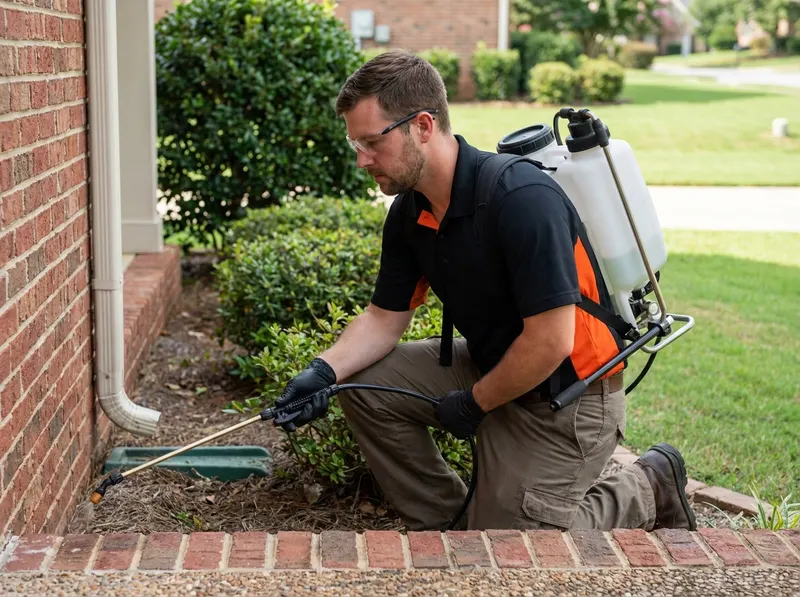
Quarterly perimeter pest defense operates on an exterior-first mechanical and liquid exclusion model designed for the distinct climate of Jefferson County. In high-humidity neighborhoods like Forest Park and Highland Park, mature oak canopies and heavy organic mulch retain elevated moisture, producing intense pressure from Argentine ants and smokybrown cockroaches. Rather than saturating internal baseboards with chemical broadcasts, perimeter defense applies a non-repellent liquid band 3 feet up the vertical masonry and 3 feet outward onto the soil. This barrier functions alongside micro-encapsulated granules dispersed across landscape beds up to 10 feet out. Crawling insects contact the residual product outdoors and carry it back to nesting colonies, halting entry into residential quarters without introducing active chemical residues near family living areas or pet spaces.
Decision-fit for residential pest management depends on the level of current pest establishment. If an active infestation of German cockroaches or subterranean termites is already documented inside structural wall voids, an intensive internal remediation protocol must precede perimeter maintenance. Conversely, for established properties seeking continuous protection, such as mid-century brick homes in Crestwood North or historic bungalows in Avondale and Glen Iris, quarterly exterior defense serves as the primary standard. The trade-off requires consistent 90-day reapplication: Alabama's average annual rainfall of 56 inches and sustained summer heat above 90 degrees naturally degrade surface residues over a 12-to-14-week window. A four-visit seasonal schedule renews this protective envelope precisely as biological barriers begin to break down under UV exposure.
Technicians follow a standardized five-step sequence during each quarterly deployment: First, clear accessible eave overhangs and porch ceilings up to 20 feet using telescoping brushes to eliminate spider webbing and mud dauber nests. Second, mechanically treat brick weep holes and exterior pipe penetrations with moisture-resistant inorganic dust. Third, apply a micro-encapsulated liquid barrier along the structural foundation perimeter. Fourth, broadcast water-activated perimeter granules across mulch, pine straw, and perimeter groundcover. Fifth, log perimeter conditions, gate closures, and specific biological pressures identified around the structure. The minimum service charge starts at $150.
Every job gets a firm, written price after a free on-site visit.
Tell us about your quarterly perimeter pest defense job in Birmingham and we'll send a clear, written quote, usually the same day.
 Kelvoro Pest Barrier