Flea and tick yard management serves properties bordering wooded margins or deep shade canopies, such as sloping lots in Forest Park, Glen Iris, or Highland Park, where tall humidity and dense pine straw beds harbor…
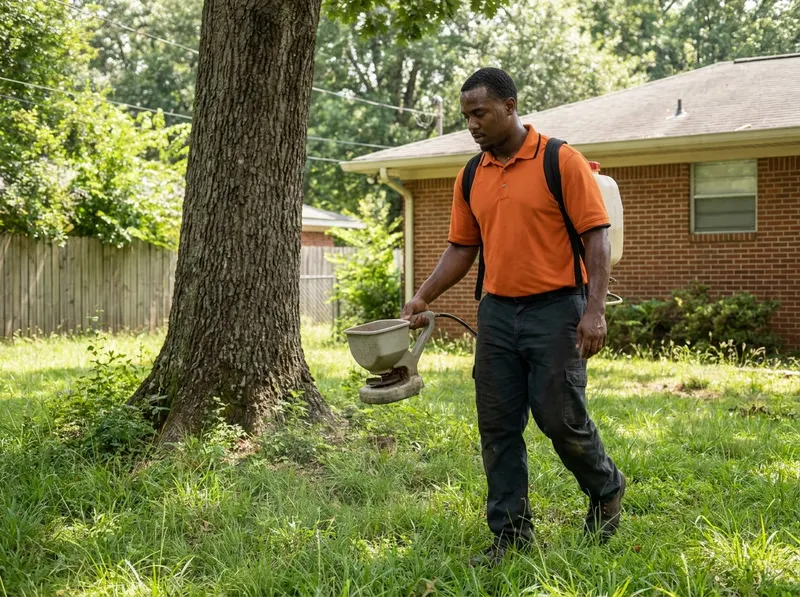
Flea and tick yard management serves properties bordering wooded margins or deep shade canopies, such as sloping lots in Forest Park, Glen Iris, or Highland Park, where tall humidity and dense pine straw beds harbor immature flea larvae and nymph ticks. Standard indoor spray protocols fail when exterior reservoir populations remain untreated; a single host rodent or neighborhood pet tracking along property boundaries re-seeds the turf weekly. Liquid synthetic pyrethroid treatments bound to microencapsulated carriers adhere to organic debris and ground foliage, resisting wash-off from typical afternoon rainstorms across Jefferson County while preventing ticks from questing atop tall fescue or bermudagrass.
The tactical decision between standard single-application treatments and cyclical recurring programs depends on tree density and active animal traffic. Properties in Crestwood North and Crestline Park with mature oaks, dense ivy, and high squirrel activity benefit from recurring 30-to-45-day treatments during peak emergence between April and October. Conversely, flat, sun-exposed lots in Smithfield or East Lake require primarily spot perimeter treatments at property fencelines. The direct trade-off involves application frequency versus residual coverage: broad-spectrum liquid applications reduce active adult ticks within 24 hours, yet require insect growth regulators (IGRs) like pyriproxyfen to stop juvenile flea pupae from emerging 14 to 21 days later.
Precise perimeter management minimizes indoor product use by establishing an unyielding exterior perimeter line. In neighborhoods like Avondale and Roebuck Springs, treatment protocols intentionally focus on shaded mulch, dense brush lines along alleyways, under-deck clearances, and exterior kennel runs rather than sunny open lawn spaces. Edible vegetable gardens, herb planter boxes, and open flowering pollinator beds are strictly excluded from contact to preserve honeybees and ensure food safety. Pets and family members remain off treated exterior surfaces until the liquid application dries completely, which reliably occurs in 90 to 120 minutes under average Alabama summer temperatures.
Every job gets a firm, written price after a free on-site visit.
Tell us about your flea and tick yard management job in Birmingham and we'll send a clear, written quote, usually the same day.
 Kelvoro Pest Barrier